Camera SVG File: A Versatile Digital Asset for Modern Design and Production
In today’s digital-first world, the ability to work with scalable vector graphics has become a cornerstone of creative and technical workflows. Among the many file formats available, the Camera SVG File stands out as a powerful tool for designers, engineers, and creators across multiple industries. This article explores the characteristics, advantages, and practical applications of the Camera SVG File, while also highlighting its compatibility with other formats such as PNG, JPG, DXF, and EPS. Whether you're working on graphic design projects, product development, or print production, understanding how to leverage these files can significantly enhance your workflow efficiency.
The Role of Camera SVG Files in Digital Design
A Camera SVG File is a type of Scalable Vector Graphics (SVG) file that represents a camera or related imagery. Unlike raster images like JPEGs or PNGs, SVG files are resolution-independent, meaning they maintain clarity at any scale. This makes them particularly useful for use in web design, branding, and technical illustrations. The Camera SVG File is especially valuable when you need to create high-quality, adaptable visuals that can be used across different platforms and devices.
One of the key advantages of using an SVG format is its support for transparency. This feature allows for seamless integration into various backgrounds and designs without the risk of color bleeding or visual distortion. For instance, a Camera SVG File with a transparent background can be easily layered over a website header or printed material without affecting the overall aesthetic.
Why Choose SVG Over Other Formats?
- Scalability: SVG files can be scaled to any size without losing quality, making them ideal for both small icons and large banners.
- Interactivity: SVG supports animation and interactivity, which is crucial for web-based applications and user interfaces.
- File Size: Compared to high-resolution raster images, SVG files are typically smaller, leading to faster load times and reduced bandwidth usage.
- Editing Flexibility: SVG files are text-based, allowing for easy editing with code editors or design software.
Comprehensive File Set for Maximum Utility
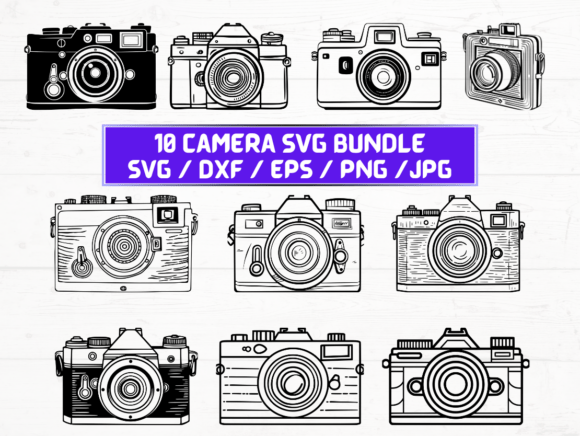
This listing provides a complete set of five file types, all designed to ensure compatibility and versatility. The package includes:
- 10 SVG Files: High-quality scalable vector graphics perfect for web and print.
- 10 PNG Files: Raster images with transparent backgrounds for use in digital media and graphic design.
- 10 DXF Files: Suitable for CAD and engineering applications, ensuring precision in technical drawings.
- 10 JPG Files: Standard image format ideal for quick sharing and web use.
- 10 EPS Files: Vector format compatible with most design software, great for print and illustration.
All files are provided at 300 dpi, ensuring high-resolution output for professional use. Whether you're preparing content for a client, creating assets for a website, or designing marketing materials, this comprehensive file set offers flexibility and reliability.
Use Cases for the Camera SVG File
The Camera SVG File is not limited to a single application. Its adaptability makes it suitable for a wide range of scenarios, including:
- Graphic Design: Use the Camera SVG File as a logo or icon in branding projects, ensuring it remains sharp and clear at any size.
- Web Development: Integrate the Camera SVG File into websites for interactive elements or visual enhancements.
- Print Media: Utilize the high-resolution versions (JPG, EPS, PNG) for brochures, posters, and packaging materials.
- Product Development: Engineers and designers can use DXF and SVG files to create precise technical drawings and prototypes.
- Education and Research: Incorporate the Camera SVG File into instructional materials, diagrams, and visual aids for clarity and engagement.
Each file format serves a specific purpose, but the Camera SVG File acts as the foundation, offering scalability and editability that other formats may lack. This combination ensures that users have access to the right tools for every project phase.
Considerations for Working with the Camera SVG File
While the Camera SVG File offers numerous benefits, there are some considerations to keep in mind when working with it:
- Software Compatibility: Ensure that your design or editing software supports SVG files, especially if you're working with complex animations or layers.
- Color Management: When exporting from design software, pay attention to color profiles to maintain consistency across different mediums.
- Backup and Version Control: Keep track of different versions of your Camera SVG File to avoid accidental overwrites or loss of important edits.
- Security: Be cautious when downloading or opening SVG files from unknown sources, as they can sometimes contain malicious code.
By addressing these considerations, you can maximize the potential of the Camera SVG File while minimizing risks associated with file handling and usage.
Conclusion
The Camera SVG File is more than just a visual asset—it's a versatile tool that bridges the gap between digital design and technical precision. With its scalability, adaptability, and compatibility across multiple formats, it offers a unique solution for professionals and hobbyists alike. Whether you're looking to streamline your workflow, enhance your designs, or expand your creative possibilities, the Camera SVG File is an invaluable addition to your digital toolkit. By understanding its features and applications, you can unlock new opportunities for innovation and efficiency in your projects.